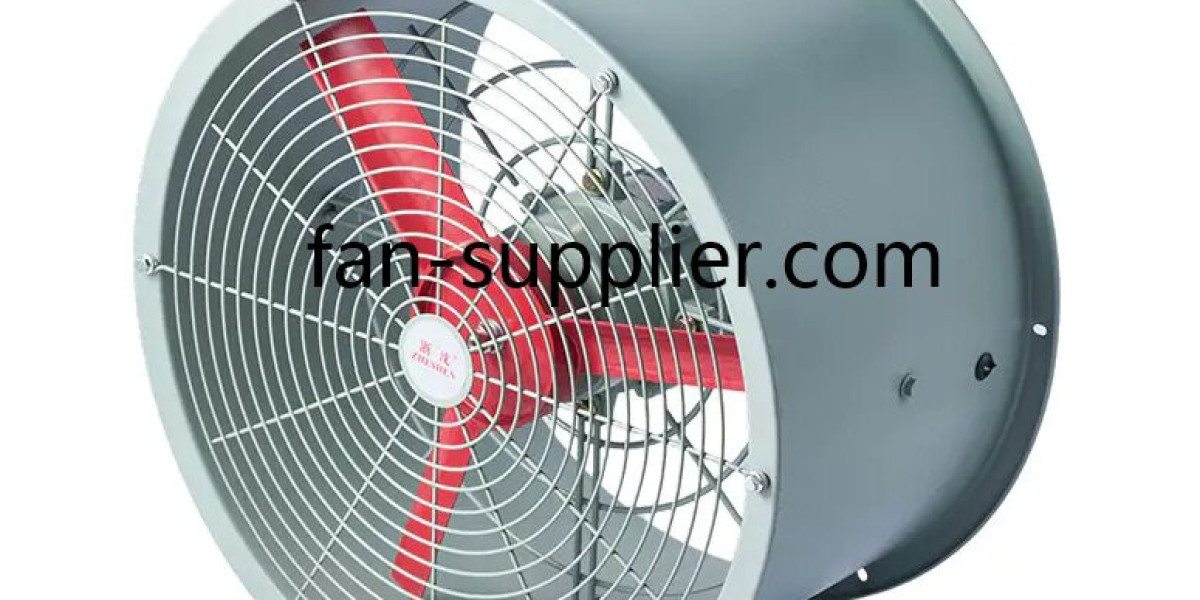
Industrial ventilation systems play an important role in maintaining comfortable and functional working environments across factories, workshops, warehouses, agricultural facilities, and other commercial spaces. When selecting an Portable Axial Fan Supplier , buyers increasingly consider more than basic airflow. Material selection, purchasing decisions, functional engineering, user experience, and product design can all influence how effectively ventilation equipment integrates into a complete working environment.
Material selection provides the foundation of industrial fan development. The housing, blades, motor-related components, protective grille, frame, and mounting structures all require materials that suit their intended roles. Manufacturers consider structural stability, surface quality, durability, resistance to environmental exposure, machinability, and maintenance needs when developing fan products. A carefully selected material combination can support reliable manufacturing while helping equipment remain practical during long-term use.
Environmental conditions are another material consideration. Industrial fans may operate in areas affected by dust, humidity, heat, chemical exposure, or general workshop residue. The materials and surface treatments used in the product therefore need to match the intended environment. Proper finishing can also make the housing easier to clean and maintain while supporting a consistent visual appearance throughout the product lifecycle.
Purchasing decisions should begin with the application rather than the fan category alone. Different facilities may require ventilation for general air circulation, exhaust, heat management, workspace comfort, or process-related airflow. Buyers can consider the room layout, ventilation goals, installation position, surrounding equipment, environmental conditions, maintenance practices, and expected operating habits. Understanding these factors helps businesses select a product that fits the actual working environment.
Supplier evaluation is equally important. Buyers may examine manufacturing experience, engineering capabilities, quality management, customization support, communication, testing, and after-sales service. A supplier with strong technical knowledge can help customers understand how product structure relates to ventilation needs. Zhejiang Shenli Explosion proof Electromechanical Co., Ltd. states that it focuses on the research, development, production, and testing of explosion-proof axial flow fans, centrifugal ventilation fans, and related fan products. (fan-supplier.com)
Functional engineering influences how an axial fan performs within a ventilation system. Blade design, housing structure, airflow direction, protective components, motor integration, and mounting arrangements need to work together as a coordinated system. Engineers consider how the fan interacts with ducts, openings, surrounding equipment, and available installation space. A practical design should support effective air movement while remaining accessible for inspection and routine maintenance.
Technology continues to influence industrial fan manufacturing. Digital design systems allow engineers to review blade geometry, housing structures, component relationships, and installation concepts before production. Modern machining, forming, balancing, assembly, and inspection processes can support better consistency during manufacturing. Testing and process monitoring also provide useful information for product refinement and quality control.
User experience is important even in industrial equipment. Operators and maintenance personnel interact with ventilation products during installation, operation, inspection, and cleaning. Clear operating controls, practical mounting arrangements, accessible components, and organized structures can make daily use easier. Equipment that is straightforward to understand and maintain can fit more naturally into established facility workflows.
Maintenance should be considered during product development as well. Industrial environments can expose fans to dust, residue, moisture, and other contaminants. Easy access to external surfaces and important service areas can make routine inspection and cleaning more convenient. A maintenance-friendly design can also help facility teams identify changes in operating condition early and organize service work more efficiently.
Design and appearance contribute to the overall perception of industrial ventilation equipment. Although function remains the primary purpose, clean housing forms, consistent finishes, organized protective structures, and balanced proportions can make equipment look more professional. A well-designed fan can integrate naturally into workshops, warehouses, factories, agricultural facilities, and commercial spaces without unnecessary visual complexity.
Customization provides additional flexibility for different ventilation projects. Customers may have specific requirements for mounting concepts, housing styles, protective arrangements, surface treatments, or product configurations. Flexible engineering capabilities allow manufacturers to adapt designs while maintaining practical production processes. Customized development can be useful when a ventilation product must fit unusual installation environments or specific equipment layouts.
Quality management connects material selection, engineering design, manufacturing, assembly, testing, inspection, and customer feedback. Consistent quality procedures help manufacturers maintain stable production and identify opportunities for continuous improvement. Feedback from users can also provide practical information about installation, cleaning, maintenance, airflow positioning, and equipment handling, helping guide future product development.
Zhejiang Shenli Explosion proof Electromechanical Co., Ltd. continues developing ventilation solutions through engineering experience, manufacturing capabilities, testing resources, and customer-oriented product development. Its product range includes axial flow fans, centrifugal ventilators, exhaust fans, and related electromechanical products for different ventilation applications. (fan-supplier.com) More information about its products and ventilation solutions is available at https://www.fan-supplier.com.